Lent has always invited the Church into a season shaped by attention rather than urgency. It asks for time set apart from distraction so that the heart may be reoriented toward God. This invitation takes on added weight during a Jubilee Year dedicated to Saint Francis of Assisi, whose own life was marked by repeated seasons of withdrawal, prayer and return.
The tradition tells us that Francis did not observe Lent only once a year. He entered into multiple Lents throughout his life, returning again and again to fasting shaped by charity and prayer rooted in love. For Francis, these seasons were not escapes from the world, but openings that allowed him to see others more clearly. Lent became a way of making room for God so that he might better respond to the needs placed before him.
This understanding of Lent remains deeply Franciscan because it is never inward alone. The emptying Francis practiced was always connected to attention toward others. His fasting sharpened awareness. His prayer softened perception. His solitude formed compassion. Lent became a space where love grew more deliberate.
During this Jubilee Year, the Church is invited to enter Lent with that same posture. The call is not simply to give something up, but to allow space for God to speak within the ordinary patterns of life. This kind of attentiveness opens the heart to the needs that might otherwise remain unseen.
In the Holy Land, Christian families live within this tension every day. Parents carry uncertainty about their children’s future. Young adults wonder whether remaining in their homeland will be possible. Daily life continues under strain that is neither chosen nor easily escaped. Their Lent is not symbolic. It is lived through perseverance.
The Franciscan Friars remain present among these families, walking patiently alongside them in circumstances shaped by forces beyond their control. This presence reflects the Franciscan conviction that faith is sustained through accompaniment rather than distance. The friars remain not because the situation is simple, but because remaining itself becomes a witness.
Lent, as understood by Francis, creates space for this kind of fidelity. It invites a pause that allows suffering to be seen rather than ignored. It invites prayer that does not turn away from hardship. It invites generosity shaped by awareness of the other.
Scripture reminds us that sacrifices pleasing to God are those rooted in care for one another, as the Letter to the Hebrews teaches when it calls believers not to neglect doing good and sharing what they have. Lent gives that call a rhythm that can be lived rather than merely heard. It creates a season where generosity becomes intentional.
For Christian families in the Holy Land, such generosity has tangible meaning. Support allows children to continue their education close to home. It allows parents to provide stability where resources are limited. It allows communities to remain rooted in the land where Christ walked.
The Jubilee Year of St. Francis draws attention to this continuity between prayer and action. Francis understood that love expressed through simplicity could reshape lives quietly over time. His approach did not seek recognition. It sought faithfulness.
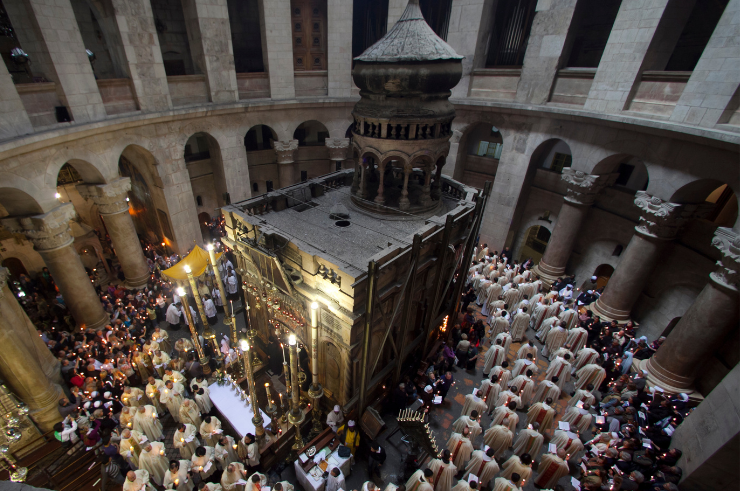
The Franciscans of the Holy Land carry that same spirit today. They safeguard sacred places through daily care. They serve families through presence. They hold space for prayer amid uncertainty. Their work reflects a belief that remaining matters.
Lent invites each believer to consider how attentiveness can shape response. It asks where space might be made for God to deepen awareness. It asks how generosity might become an offering shaped by intention rather than impulse.
The appeal of Lent during a Jubilee Year lies in this convergence. A season of reflection meets a year dedicated to a saint who lived reflection repeatedly. Together they call the Church to a posture that listens before it acts.
For those far from the Holy Land, Lent becomes a bridge rather than a distance. It allows believers to enter into solidarity with Christians whose faith is lived under pressure. Supporting them becomes a way of participating in a shared body rather than observing from afar.
The Franciscan understanding of community insists that no one stands alone. The needs of one become the concern of all. Lent shapes this awareness by slowing the heart enough to recognize it.
As Lent continues, there remains time to respond. There remains space to open the heart. There remains an invitation to allow generosity to take shape in quiet ways that endure beyond the season.
The Jubilee Year of St. Francis reminds the Church that such responses do not need fanfare. They need faithfulness. A small offering given with intention becomes part of a larger witness that unfolds day after day.
In the Holy Land, that witness is visible in children attending school, families remaining rooted and friars continuing their presence. These are the fruits of generosity shaped by prayer.
Lent does not end at Easter without leaving a trace. When lived with attention, it reshapes how believers see the world. It reshapes how they respond to need. It reshapes how faith is carried forward.
During this holy season, the Church is invited to hold together prayer and presence. The Jubilee Year of St. Francis offers a lens through which this union becomes clearer. Lent becomes not an isolated observance, but a way of entering more deeply into the shared life of the Church.
Supporting Christians in the Holy Land during Lent honors this tradition. It allows generosity to become an act of communion. It allows the spirit of Francis to continue shaping lives where faith endures under strain.
Lent passes. Love remains. The Jubilee Year calls the Church to choose what will endure.