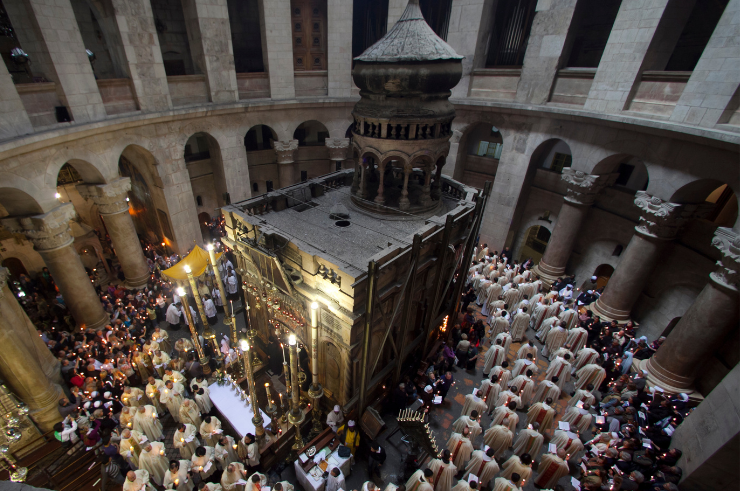
Holy Week is not simply a prelude to Easter. For Catholics, it is the most sacred and concentrated period of the entire liturgical year. In the span of seven days, the Church enters into the central mysteries of the Christian faith: Christ’s Passion, Death and Resurrection. Everything Catholics believe, celebrate and live flows from what unfolds during this week.
While Christmas often receives more cultural attention, Holy Week is the theological heart of Christianity. Without it, Easter has no meaning. Without Easter, the Cross is only suffering. And without the Cross, Christianity collapses into moral teaching rather than saving truth.
Holy Week invites Catholics not just to remember what happened two thousand years ago, but to participate spiritually in the saving events that continue to shape the Church and the world.
What Is Holy Week?
Holy Week begins on Palm Sunday and concludes on Easter Sunday. It commemorates the final days of Jesus Christ’s earthly life, from His triumphant entry into Jerusalem to His Crucifixion and Resurrection.
Unlike other liturgical observances, Holy Week is not primarily instructional. It is experiential. The Church does not rush through these days. She slows down, prays differently, reads Scripture differently and asks the faithful to do the same.
Each day carries weight, but the week reaches its summit in the Sacred Triduum.
The Triduum: The Heart of Holy Week
The Sacred Triduum spans three days but is considered one continuous liturgical celebration:
- Holy Thursday evening
- Good Friday
- Holy Saturday, culminating in the Easter Vigil
These are not separate commemorations. They are one mystery unfolding in time.
Holy Thursday recalls the institution of the Eucharist and the priesthood. Good Friday confronts the reality of sin and the cost of redemption. Holy Saturday teaches silence, waiting and hope. The Easter Vigil proclaims that death does not have the final word.
The Church calls these days “sacred” because they make present the saving work of Christ in a unique way.
Holy Thursday: Love Made Sacramental
On Holy Thursday, Catholics remember the Last Supper, where Christ instituted the Eucharist and the priesthood. This is the moment when Jesus gives His Body and Blood not symbolically, but sacramentally, anticipating the sacrifice of the Cross.
The washing of the feet reveals the meaning of authority in the Church: service, humility and self-gift. Christ does not rule from power. He kneels.
Holy Thursday teaches that love is not abstract. It is given, poured out and entrusted to the Church to be carried forward through time.
Good Friday: The Scandal and Glory of the Cross
Good Friday is the most sobering day of the liturgical year. The Church does not celebrate Mass. The altar is stripped. The tabernacle is empty. Silence dominates.
Catholics venerate the Cross because it is not merely an instrument of death. It is the means of salvation. On Good Friday, the Church proclaims that suffering is not meaningless and that love can endure even betrayal, abandonment and death.
This day confronts believers with a hard truth: salvation is costly. Grace is free, but it is not cheap.
Holy Saturday: The Silence That Prepares for Resurrection
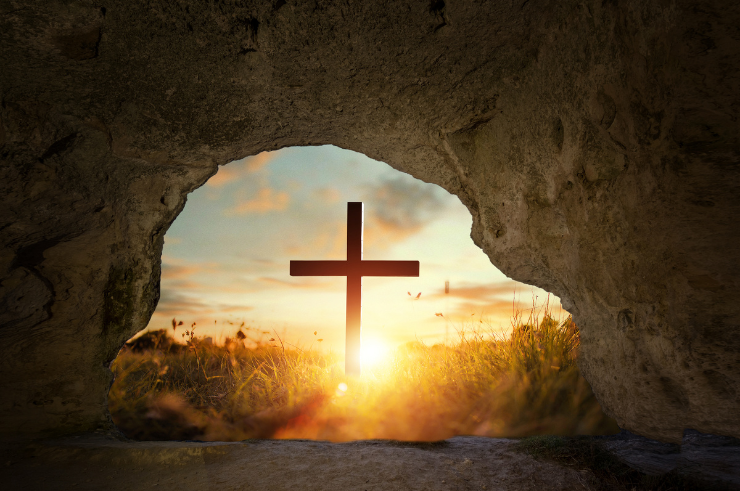
Holy Saturday is often overlooked, but it holds deep spiritual significance. The Church waits at the tomb. There are no sacraments celebrated during the day. There is no dramatic action.
This silence reflects the experience of every believer who has waited for God to act, who has prayed without immediate answers, who has sat in grief or uncertainty.
Holy Saturday teaches patience, trust and hope when God seems absent but is still at work.
Easter Vigil: The Turning Point of History
The Easter Vigil is the most solemn and beautiful liturgy of the Church year. Light breaks into darkness. Scripture traces salvation history. Water brings new life through baptism. The Church erupts in Alleluia.
This is not simply a celebration of something that happened long ago. The Resurrection is a present reality. It changes the meaning of suffering, death and human existence itself.
Holy Week reaches its fulfillment here, not by erasing the Cross, but by revealing its purpose.
Why Holy Week Matters More Than Any Other Week
Holy Week is the lens through which Catholics understand everything else.
- It explains why the Eucharist matters.
- It explains why sacrifice is central to love.
- It explains why suffering is not the end of the story.
Every Mass echoes Holy Thursday and Good Friday. Every baptism flows from Easter. Every act of charity is rooted in the self-giving love revealed during this week.
To miss Holy Week is not just to miss a set of services. It is to miss the deepest invitation of the Christian life… to walk with Christ through death into new life.
Entering Holy Week Intentionally
The Church does not ask Catholics to rush through Holy Week. She asks them to enter it.
This means making time for the liturgies, embracing silence, resisting distraction and allowing the events of the week to shape prayer and perspective.
Holy Week forms Catholics not by information, but by encounter.