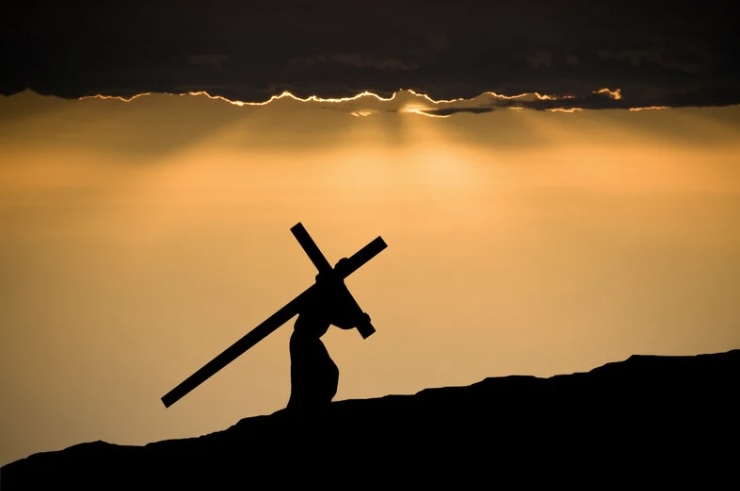
For Christians around the world, the Holy Land is much more than a place on a map. It is the land of the Gospel. It is where the Angel Gabriel appeared to Mary in Nazareth. It is where Jesus was born in Bethlehem, preached throughout Galilee, carried His cross through Jerusalem and rose from the dead.
Every year, pilgrims travel thousands of miles to walk where Christ walked and pray where some of the most important moments in salvation history took place.
Yet there is another side to the Holy Land that many people never see.
The Holy Land is not only home to sacred sites. It is also home to Christian families who continue to live, work, worship and raise their children in the very places where Christianity began.
For generations, these families have served as a living witness to the faith. Today, however, many face difficult challenges that threaten their ability to remain in the land they call home.
As a result, the Christian population of the Holy Land continues to decline.
Why is this happening? And why does it matter to Christians around the world?
A Declining Christian Presence
The Christian community in the Holy Land has existed continuously since the time of Christ and the Apostles.
For centuries, Christian families have contributed to the spiritual, cultural and social life of the region. They have preserved traditions, cared for holy sites, educated future generations and provided a visible Christian witness in the land where our faith was born.
Today, however, Christians make up only a small percentage of the population in much of the Holy Land.
Many families who have deep roots in cities such as Bethlehem, Jerusalem and Nazareth have made the difficult decision to leave in search of greater stability and opportunity elsewhere.
This is not because they want to leave their homeland.
For most families, the decision comes after years of struggle and uncertainty.
Like families everywhere, they want the opportunity to build a future, support their children and live with dignity. When those opportunities become increasingly difficult to find, many begin looking beyond the Holy Land for a better path forward.
Each departure represents more than a demographic shift.
It represents the loss of a family, a community member and a living connection to the Christian history of the region.
The Challenge of Economic Hardship
One of the greatest challenges facing Christian families in the Holy Land today is economic hardship.
Many communities rely heavily on tourism and pilgrimages. When travel declines due to political instability, conflict or global events, local businesses often suffer immediately.
Families that depend on tourism-related jobs can find themselves facing reduced income or unemployment with very little warning.
Young adults often struggle to find meaningful employment opportunities that allow them to remain in their hometowns. Many highly educated young Christians leave because they see few opportunities to establish careers, purchase homes or support future families.
Parents naturally want the best for their children. When opportunities become limited, many begin considering relocation as a way to provide greater stability and security.
Over time, this creates a cycle that becomes increasingly difficult to reverse.
As more families leave, communities become smaller and local Christian institutions face additional challenges.
The Impact of Conflict and Uncertainty
The Holy Land has experienced periods of conflict and instability throughout its history.
While the resilience of its people is remarkable, ongoing uncertainty can take a significant toll on families.
Conflict affects more than daily life. It impacts employment, education, housing and long-term planning.
Families often find themselves asking difficult questions about the future.
Will there be opportunities for their children?
Will they be able to remain in their communities?
Can they continue building a life in the place they love?
These questions are not theoretical.
They affect real families making real decisions about their future.
Many Christian families remain deeply committed to their homeland despite these challenges. They want to stay. They want to continue worshipping in the churches their families have attended for generations. They want their children to grow up connected to the land where Christ lived.
What they often need is support, encouragement and practical assistance that makes staying possible.
Why the Christian Presence Matters
Some may ask why the declining Christian population matters.
After all, the churches, shrines and sacred sites will still be there.
The answer is simple.
The Holy Land needs more than sacred places.
It needs a living Christian community.
The churches and holy sites of the Holy Land are treasures of our faith, but they were never meant to stand alone. They are places of worship, prayer and encounter because Christian communities continue to gather within them.
The Christian families of the Holy Land are not simply residents of a historic region. They are living witnesses to the Gospel.
They are teachers, parents, students, parishioners and community leaders. They keep traditions alive and pass the faith from one generation to the next.
When pilgrims visit the Holy Land, they encounter more than ancient stones and historic landmarks. They encounter a vibrant Christian community that continues to live out its faith where Christianity began.
Preserving that Christian presence is not only important for the people who live there. It is important for the entire Church.
As Saint Paul reminds us, “If one part suffers, all the parts suffer with it; if one part is honored, all the parts share its joy” (1 Corinthians 12:26).
The Christians of the Holy Land are our brothers and sisters in Christ. Their future matters to all of us.
How Franciscan Foundation for the Holy Land Helps
For decades, Franciscan Foundation for the Holy Land has worked alongside the Franciscan Friars and local partners to support Christian families throughout the Holy Land.
Our mission is rooted in a simple belief: Christian families should have the opportunity to remain in the place they call home.
Through educational assistance, housing support and humanitarian programs, FFHL helps provide practical solutions to some of the challenges families face.
Education plays a critical role in helping young people build a future in the Holy Land. Housing assistance helps families establish stability and remain rooted in their communities. Humanitarian support helps address urgent needs during times of hardship and uncertainty.
These programs do more than provide assistance.
They provide hope.
They help families see a future for themselves and their children in the Holy Land.
Most importantly, they help strengthen the Christian presence that has existed there for nearly two millennia.
How You Can Help
The challenges facing Christian families in the Holy Land are significant, but there is reason for hope.
Every act of generosity sends a powerful message to our brothers and sisters in Christ: You are not forgotten.
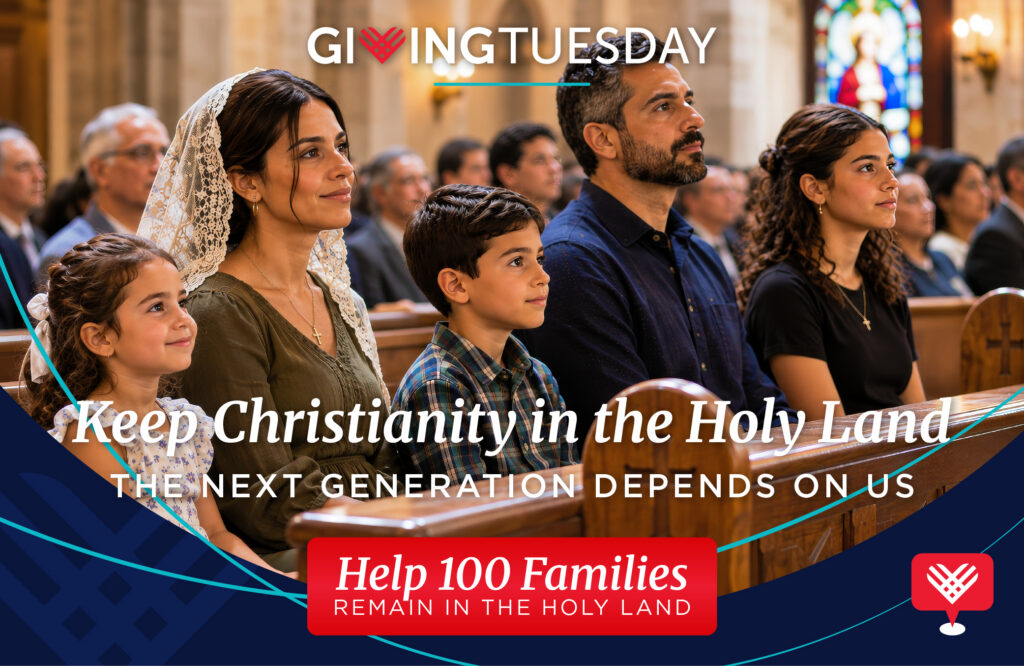
This GivingTuesday, Franciscan Foundation for the Holy Land is launching the 100 Families Challenge, with a goal of raising $15,000 to help support 100 Christian families who want to remain in the place they call home.
Your gift will help provide the support families need to remain rooted in the land where Christianity began.
Your gift will help provide the support families need to remain rooted in the land where Christianity began.
The Holy Land is more than the setting of the Gospel.
It is home to a living Christian community whose faith continues to inspire the world.
This GivingTuesday, we invite you to stand with them.
Join the 100 Families Challenge and help strengthen the Christian presence in the Holy Land for generations to come.